My Dream Job in Edo-Era Japan: A Traveling Book Lender
Every year, our engineering teams in Japan have a “Fun Day” with action-packed activities like go-karting or bubble soccer, followed by a BBQ. In recent years, I’ve been happy to see more choices, including activities where people can explore at their own pace. As an introvert, I really appreciate having these different options.
Last time, I chose the Harry Potter Studio Tour, even though I’d never read the books or watched the movies! I simply liked the idea of exploring at my own pace. I do feel a little sorry for the real fans who couldn’t go, though.
This year, I chose the Edo-Tokyo Museum, which had just reopened after four years of renovation. I knew very little about the Edo period, so I was looking forward to learning more about life back then. One occupation in particular fascinated me: a traveling book lender. Once I started imagining what a day in that job would be like, I couldn’t stop thinking about it. And soon I found myself picking up books to learn more.
A little about Edo
The Edo period (1603–1868) is an incredible part of Japanese history. For more than 250 years, Japan enjoyed a relatively peaceful and stable period. This long period of stability helped art, craftsmanship, and literature flourish.
Education also spread among ordinary people. Children learned reading, writing, and math at small schools called terakoya (寺子屋). One detail in the museum’s classroom display caught my eye: students used small individual desks called Tenjin-zukue (天神机), or Tenjin desks.
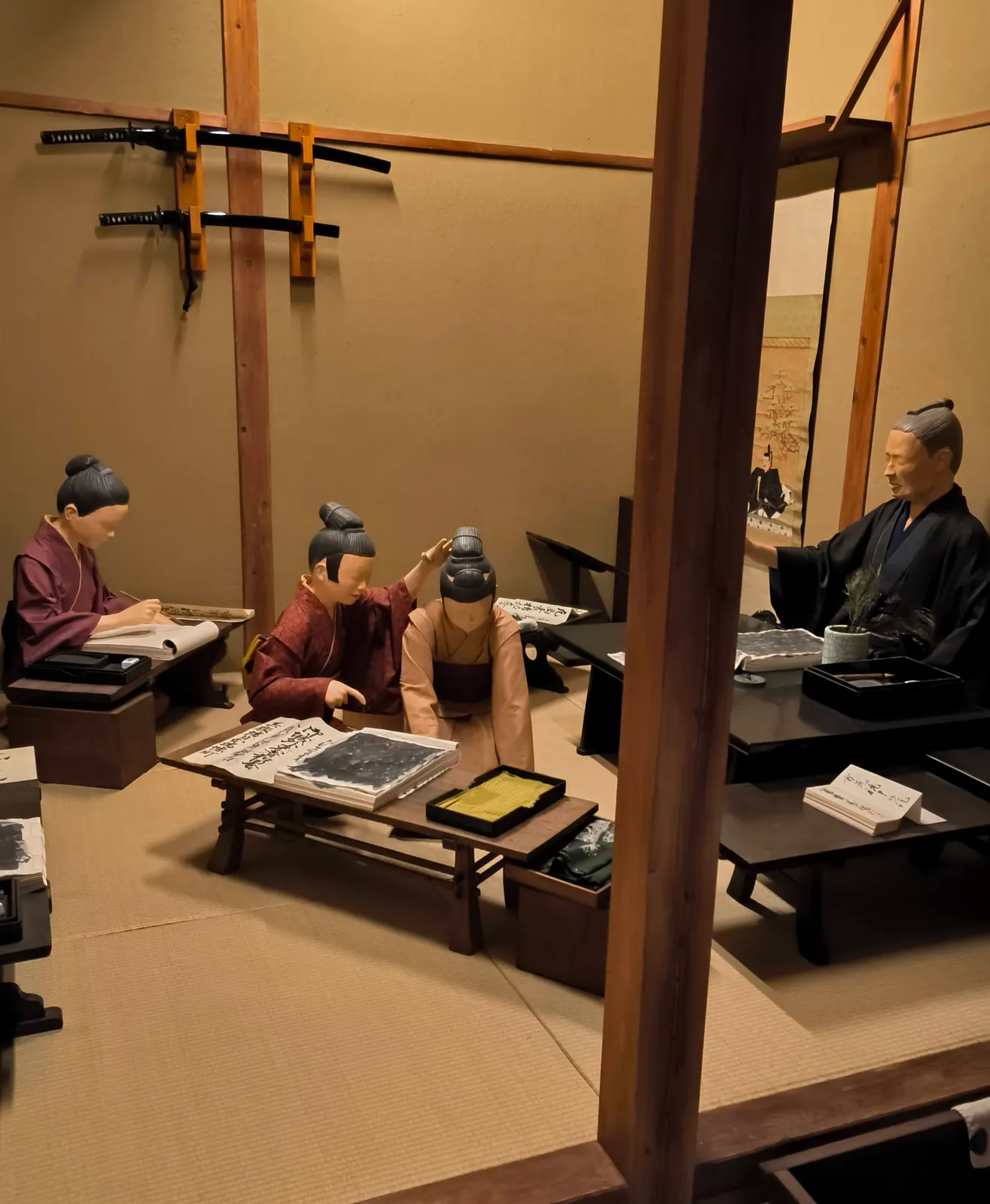
Yes, Tenjin again!
Tenjin is a name I encounter almost every day at work—it’s the name of a software project I’ve worked on for years. I even wrote an entire article about the history behind the name, Before Tenjin Became a God, telling the story of a scholar who later came to be worshipped as the god of learning. These desks were named in his honor.
After all that research, it was fun to spot the name again in another corner of the museum. It reminded me of how I started noticing left-handed people everywhere once I realized my daughter was left-handed. Anyway, back to Edo.
As education spread, more people were able to read, and books became an important part of popular culture. And that brings me to the job I want to talk about.
Meet the Book Lender
The job was called kashihon-ya (貸本屋), literally a book lender.
Books were relatively expensive in Edo Japan, and many ordinary people lived in small rented homes with little space to store them. While bookstores existed, borrowing books was a more practical and affordable way to enjoy reading. Book lenders made a living by lending books to customers for a fee.
Some operated shops, but many traveled around towns with books wrapped in cloth or packed in boxes, visiting customers at their homes. They delivered new books, collected the old ones, and recommended what to read next.
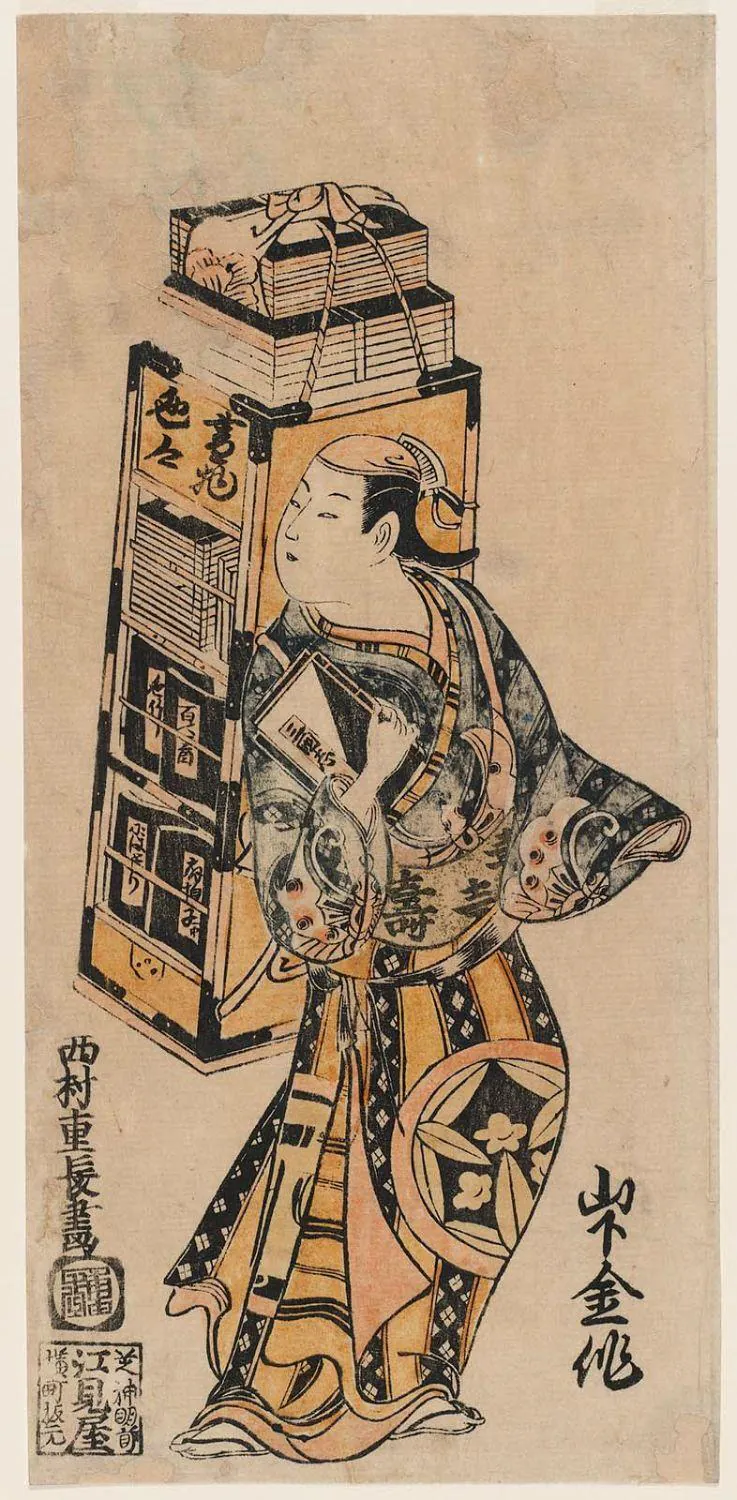
Looking at the illustrations, I was surprised by the size of the loads they carried. Some look more like huge hiking backpacks than bags of books!
This was not a small business either. A record from 1808 lists more than 650 book-lending businesses in Edo, the city we now call Tokyo. For comparison, there were 1,089 registered bookstores in Tokyo as of June 2026.1 Of course, we’re comparing book lenders with bookstores, and Edo was much smaller than modern Tokyo. Still, it gives you an idea of how common the business was. What interested me most was how personal this business could be.
I found a funny exchange in an Edo-period novel2 between a book lender and his customer. It went something like this:
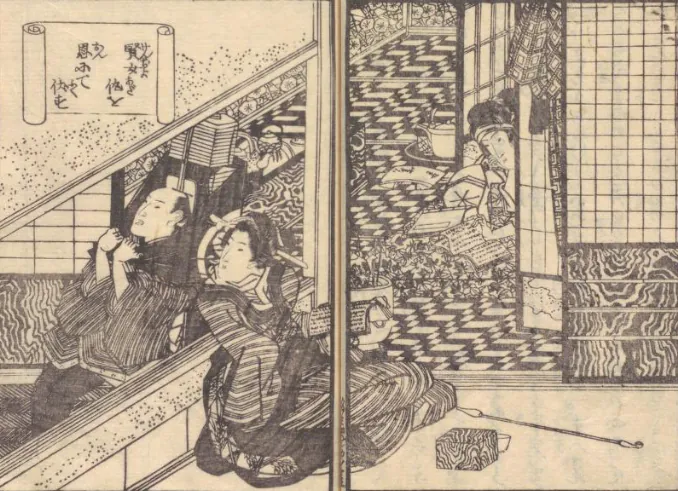
Reader: “Another book by that author? I didn’t like his last one.”
Book lender: “Ah, but that one wasn’t really written by him! His students wrote it under his name. This one is the real thing, and it’s much better!”
And the book lender closes the deal.
This was a eureka moment for me. It was exactly how I had imagined the business side of book lending. And as time passed, the more I thought about it, the more attractive the job became.
What if I were a Book Lender?
Now, the following is mostly my imagination. I’m still learning about the actual lives of Edo book lenders, so please don’t take this as a historically accurate job description.
But imagine this.
Say I wake up in Edo, ready to start another day as a book lender.
First, I look at my customer list. Who am I visiting today?
Perhaps I could organize my visits by interest. One day for customers who love novels, another day for those who enjoy nonfiction.
I could plan my routes, group customers by area, and decide which books to carry for the day.
I remember what my customers borrowed last time, what they liked, and what they complained about. Then I go through my collection and pick the books.
I can’t bring everything. Books are heavy, and I’ll be walking around the town all day. So I have to choose carefully.
This already sounds like a fun challenge, almost like a solo entrepreneur!
Then I start visiting my customers.
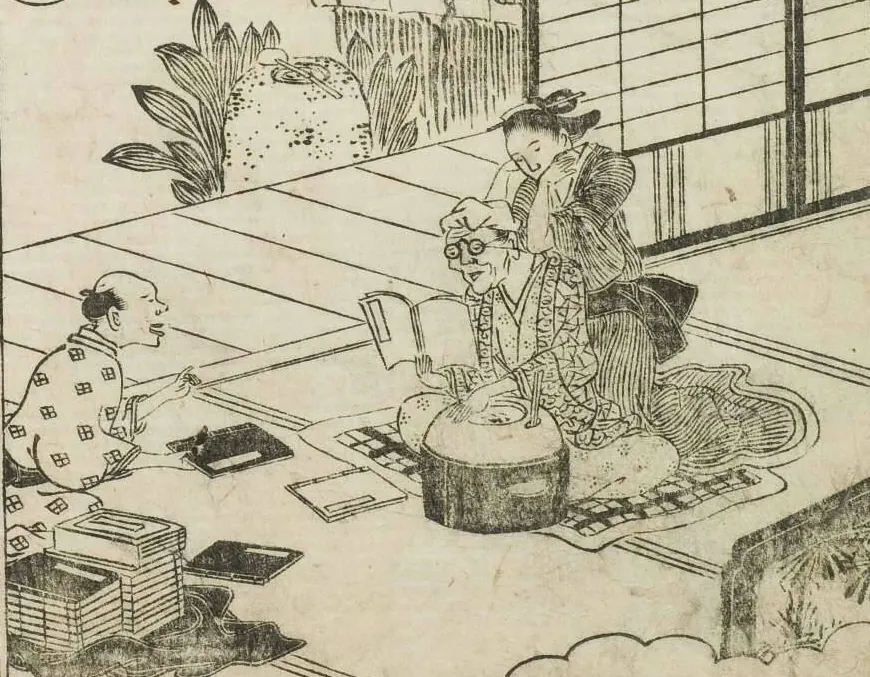
At the first house, I collect a book from last week.
Perhaps the customer loved the story but was disappointed by the ending. Or maybe they liked the series and the main character and wanted to read the sequels.
I listen carefully and try to understand what they really enjoy. Then I take out a few books and explain why I think they might like them. Sometimes I have read the books myself. Sometimes I haven’t, but I know what other customers have said about them.
Over time, I build my own “database” of reviews and opinions, not from a website, but from real conversations with readers. And I can use that knowledge to recommend books to the next customer.
Of course, I also need to be a good salesperson.
Maybe a wealthy young man is trying to impress someone. I might recommend a book that makes him look a little more educated than he really is.
Not exactly an honest literary recommendation, perhaps. But I have a business to run!
Every customer is different. I need to understand the person, choose the right book, and find the right words to recommend it.
And the best part is that I can see their reactions immediately. I can change my approach, try different words, and see what works. Almost like playing a real-time strategy game, such as StarCraft, except that I’m recommending books instead of commanding units!
And when I get tired, I could find somewhere quiet to sit, open a book I just collected, and reread a passage the previous customer had pointed out during our conversation.
By the end of the day, I return home, organize my books, think about what to get next, and prepare for tomorrow.
I’m sure the real job involved plenty of hard work, difficult customers, and financial worries. Carrying heavy books around the city every day would not be easy either. But then again, show me an easy job—in Edo or today! Still, I can’t help thinking: what an interesting and exciting way to make a living!
A matchmaker between books and readers
I’ve sometimes imagined running a small bookstore or a book café. But there’s something different about being a traveling book lender.
In a bookstore, I would spend time choosing the books, arranging the shelves, and creating a cozy place for people to visit. Then I’d spend much of my time behind the counter, waiting for customers to find something they like. After all, I can’t imagine myself walking up to every customer and asking, “Hey, how are you doing today?” Especially in a Japanese bookstore!
In a way, that reminds me of software engineering. We design something, release it, observe how people use it, and keep iterating on it.
But as a book lender, I could go directly to my customers. I could talk to them, learn about their interests, see their reactions, and change my recommendation right there.
The most attractive part isn’t simply being surrounded by books. It’s the chance to connect people with books they might love.
And I found something interesting while researching this topic. An Edo-period writer named Santo Kyoden once compared the relationship between publishers, readers, and book lenders to a marriage. The publisher was the bride’s family, the reader was the groom, and the book lender was the matchmaker.3
A matchmaker between books and readers.
I think that’s a wonderful way to describe the job.
What if Book Lenders Still Existed Today?
Today, I usually browse bookstores, pick a few books that catch my attention, and read a little before buying. But I rarely get to talk with another book lover in the process.
Now imagine someone coming to my door with a bag of books. They remember what I read last month and what I thought about it. They bring a few books that might interest me, and we spend ten minutes talking about them.
Would I pay for that service?
I think I actually would.
Of course, I know I’m probably romanticizing this old job. I still have a lot to learn about how book lenders really lived. I’ve already found a novel about a woman book lender, and that’s next on my reading list.
But if someone ever invents a time machine, I think I already have my business plan ready.
My back, on the other hand, might need some training.
-
Edo figure: 1808 record, documented by the Tokyo Metropolitan Library. Modern figure: JPO bookstore registration data, June 2026. The figures count different things and cover different geographic areas. ↩
-
Shunshoku Tatsumi no Sono (春色辰巳園), by Tamenaga Shunsui (為永春水), published 1833–1835. ↩
-
Santō Kyōden, Sōchōki (双蝶記), 1813. Ritsumeikan University Art Research Center. ↩
